Description
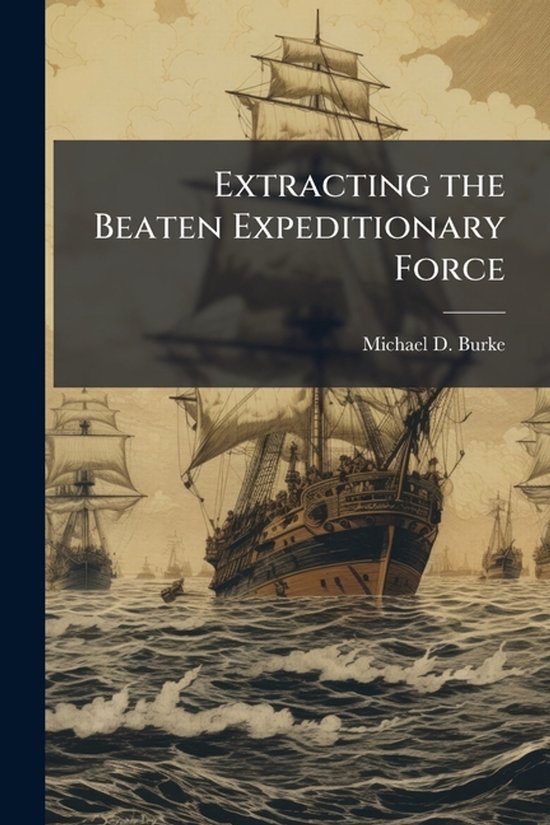
This paper examines theater evacuations conducted over significant bodies of water. Extricating any defeated force is difficult; withdrawing the force across a major water body is the special challenge of maritime powers with distant commitments, such as the United States. The monograph focuses on combat force evacuation and does not discuss Non-combatant Evacuation Operations (NEO), a separate and important component of many of today’s war plans. This paper is structured around five withdrawals arranged chronologically. They are: 1) Dunkirk. 2) Norway, 3) Greece and Crete, 4) Guadalcanal, and 5) Hungnam, Korea. These five were selected because air power affected them, and because they illustrate a range of differing theater circumstances. Each operation is examined for its salient features, and the major lessons from each are identified. Other retreats conducted by the Germans from the Crimea and Sicily in 1943 or the Nationalist Chinese in 1949 are omitted for brevity. Following the historical section, the paper synthesizes some of the salient characteristics of the various operations into three major operational points. They are 1) the necessity of making a timely evacuation decision, 2) the need to synchronize components for the evacuation, and 3) the reversal of the defender’s advantage as discussed by Clausewitz. The paper concludes by examining implications for future planners of large scale combat evacuations. It considers the effects of modern weapons, air transport, and the evolution or power projection. The minimum requirement to examine evacuation requirements within a theater is emphasized.
This work has been selected by scholars as being culturally important, and is part of the knowledge base of civilization as we know it. This work was reproduced from the original artifact, and remains as true to the original work as possible. Therefore, you will see the original copyright references, library stamps (as most of these works have been housed in our most important libraries around the world), and other notations in the work.
This work is in the public domain in the United States of America, and possibly other nations. Within the United States, you may freely copy and distribute this work, as no entity (individual or corporate) has a copyright on the body of the work.
As a reproduction of a historical artifact, this work may contain missing or blurred pages, poor pictures, errant marks, etc. Scholars believe, and we concur, that this work is important enough to be preserved, reproduced, and made generally available to the public. We appreciate your support of the preservation process, and thank you for being an important part of keeping this knowledge alive and relevant.
LangueenVersionBrochéDate de sortie initiale09 novembre 2012Nombre de pages64
Personnes impliquées
Auteur principal
Michael D Burke
Editeur principal
BiblioBazaar, LLC
Informations sur le fabricant
Nom du fabricantLibri GmbHAdresse électronique du fabricantgpsr@libri.deInformations sur le fabricantLes autres informations du fabricant ne sont actuellement pas disponibles
Autres spécifications
Hauteur de l’emballage3 mmHauteur du produit3 mmLargeur d’emballage156 mmLargeur du produit156 mmLongueur d’emballage234 mmLongueur du produit234 mmPoids de l’emballage104 g
EAN
EAN9781288253005
Sécurité des produits
Opérateur économique responsable dans l’UE
Afficher les données
Vous trouverez cet article :
Catégories
Hommes et société
Histoire
Défense et guerre
Guerres
Stratégie de défense
Marine
Histoire militaire
Livres
Livre, ebook ou livre audio ?
Livre
Disponibilité
Disponible à l’adresse suivante
Langue
Anglais
Type de livre
Paperback