Description
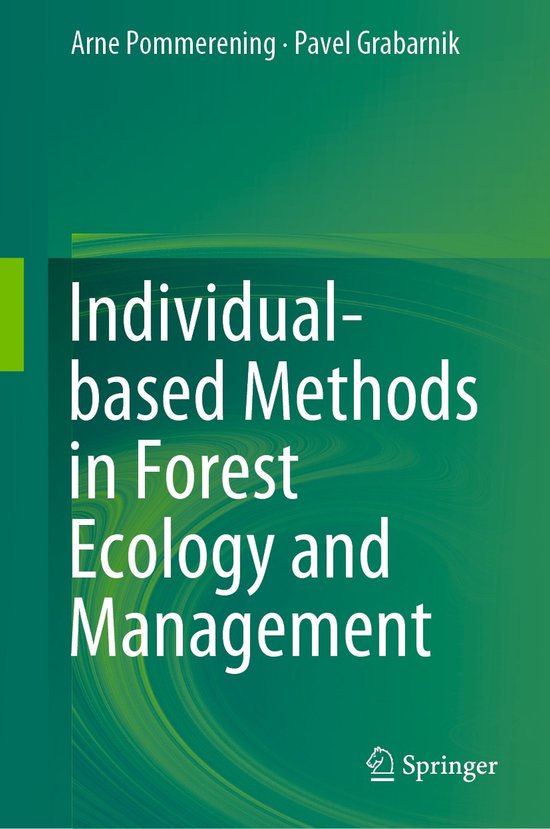
Model-driven individual-based forest ecology and individual-based methods in forest management are of increasing importance in many parts of the world. This book unites important methods of individual-based forest ecology and management from point process statistics, individual-based modelling, plant growth science and behavioural statistics.
Model-driven individual-based forest ecology has emerged in the 1990s and has given rise to a wealth of publications. At the same time, individual-based methods in forest management have been refined in a number of different countries and steadily grow in importance. For the first time this book integrates three main fields of forest ecology and management, i.e. tree/plant interactions, biometry of plant growth and human behaviour in forests. Individual-based forest ecology and management is an interdisciplinary research field with a focus on how the individual behaviour of plants contributes to the formation of spatial patterns that evolve through time. Key to this research is a strict bottom-up approach where the shaping and characteristics of plant communities are understood to be mostly the result of interactions between plants and between plants and humans. Written in a highly accessible style, the book provides essential information on theories and concepts of individual-basedforest ecology and management and introduces point process statistics for analysing plant interactions. This is followed by methods of spatial modelling with a focus on individual-based models. The text is complemented by key concepts of modern plant growth science. Finally new methods of measuring, analysing and modelling human interaction with trees in forest ecosystems are introduced and discussed. For better access and understanding, all methods introduced in this book are accompanied by example code ready to use in the statistical software R and by worked examples. Additional technical details are given in three appendices.
- Langue
- en
- Version
- Couverture rigide
- Date de sortie initiale
- 27 septembre 2019
- Nombre de pages
- 411
- Illustrations
- Avec illustrations
Personnes impliquées
- Auteur principal
-
Arne Pommerening
- Deuxième auteur
-
Pavel Grabarnik
- Editeur principal
-
Springer Nature Switzerland AG
Informations sur le fabricant
- Nom du fabricant
- Springer Nature Customer Service Center GmbH
- Adresse du fabricant
- Europaplatz 3 | 69115| Heidelberg| DE
- Adresse électronique du fabricant
- ProductSafety@springernature.com
- Informations sur le fabricant
- Les informations du fabricant ne sont actuellement pas disponibles
Autres spécifications
- Hauteur de l’emballage
- 235 mm
- Largeur d’emballage
- 155 mm
- Largeur du produit
- 155 mm
- Livre d‘étude
- Non
- Longueur d’emballage
- 235 mm
- Longueur du produit
- 235 mm
- Poids de l’emballage
- 805 g
- Police de caractères extra large
- Non
- Édition
- 1st ed. 2019
EAN
- EAN
- 9783030245276
Sécurité des produits
- Opérateur économique responsable dans l’UE
-
Afficher les données
Vous trouverez cet article :
- Catégories
-
Science et nature
Technologie et architecture
Ordinateurs et Informatique
Technologies informatiques
Technologie de l’énergie
Agriculture et exploitations agricoles
Biologie
Mathématiques
Intelligence artificielle
Énergie alternative
Sylviculture et foresterie
Écologie
Calcul des probabilités et statistiques
Reconnaissance de modèles
Livres
- Livre, ebook ou livre audio ?
-
Livre
- Disponibilité
-
Disponible à l’adresse suivante
- Langue
-
Anglais
- Type de livre
-
Hardcover