Description
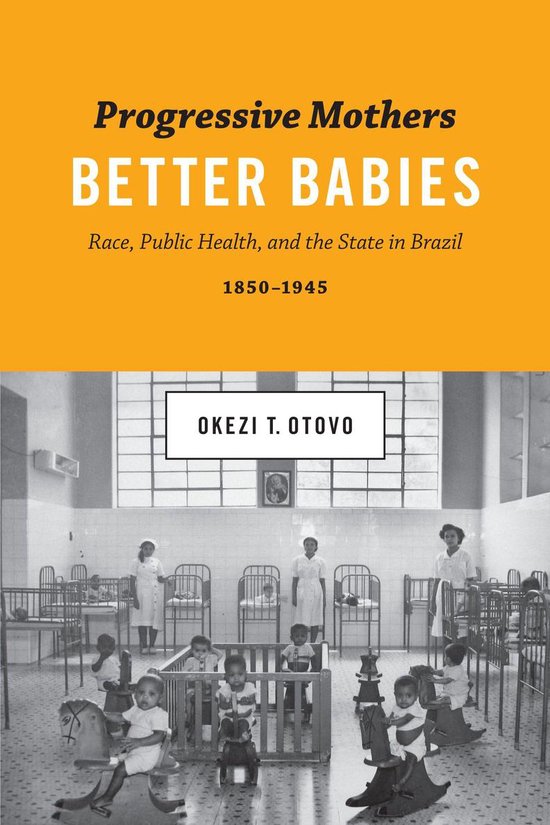
In Bahia, Brazil, the decades following emancipation saw the rise of reformers who sought to reshape the citizenry by educating Bahian women in methods for raising “better babies.” The idealized Brazilian would be better equipped to contribute to the labor and organizational needs of a modern nation. Backed by many physicians, politicians, and intellectuals, the resulting welfare programs for mothers and children mirrored complex debates about Brazilian nationality. Examining the local and national contours of this movement, Progressive Mothers, Better Babies investigates families, medical institutions, state-building, and social stratification to trace the resulting policies, which gathered momentum in the aftermath of abolition (1888) and the declaration of the First Republic (1889), culminating during the administration of President Getúlio Vargas (1930–1945).
Exploring the cultural discourses on race, gender, and poverty that permeated medical knowledge and the public health system for almost a century, Okezi T. Otovo draws on extensive archival research to reconstruct the implications for Bahia, where family patronage politics governed poor women’s labor as the mothers who were the focus of medical interventions were often the nannies and nursemaids of society’s wealthier families. The book reveals key transition points as the state of Bahia transformed from being a place where poor families could expect few social services to becoming the home of numerous programs targeting the poorest mothers and their children. Negotiating crucial questions of identity, this history sheds new light on larger debates about Brazil’s past and future.
- Langue
- en
- Version
- livre numérique
- Date de sortie initiale
- 31 mai 2016
- Format ebook
- EPUB2
- Illustrations
- Non
Personnes impliquées
- Auteur principal
-
Okezi t. Otovo
- Deuxième auteur
-
Okezi T Otovo
- Editeur principal
-
University Of Texas Press
Options de lecture
- Lisez cet ebook sur
- Lecteur électronique KoboOrdinateur de bureau (Mac et Windows)Windows (smartphone et tablette)Android (smartphone et tablette)iOS (smartphone et tablette)
Informations sur le fabricant
- Informations sur le fabricant
- Les informations du fabricant ne sont actuellement pas disponibles
Autres spécifications
- Largeur d’emballage
- 0 mm
- Livre d‘étude
- Non
- Longueur d’emballage
- 0 mm
- Porno
- Non
EAN
- EAN
- 9781477308851
Sécurité des produits
- Opérateur économique responsable dans l’UE
-
Afficher les données
Vous trouverez cet article :
- Catégories
-
Hommes et société
Médecine et Soins infirmiers
Histoire
Médecine générale
Services sociaux
Groupes sociaux
Services de santé
Études ethniques
Protection de l’enfance et aide à la jeunesse
Livres
- Livre, ebook ou livre audio ?
-
Ebook
- Disponibilité
-
Disponible à l’adresse suivante
- Langue
-
Anglais
- Pays
-
Brésil