Description
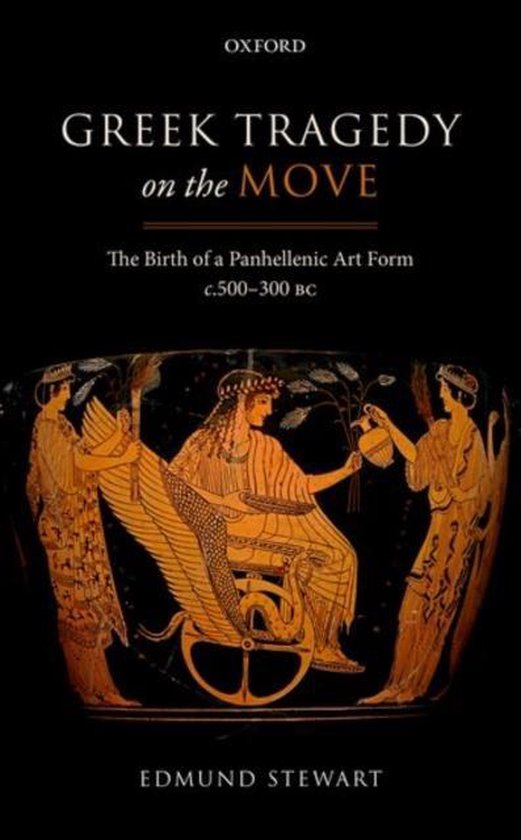
What made Greek tragedy ‘Greek’? Tragic theatre is often seen primarily as a cultural product of one city: Athens. By contrast, this volume argues that it was a panhellenic phenomenon, born out of travel in the fifth century BC, in which audiences, poets, actors, and the heroes they played were continually on the move across the Greek world. Greek tragedy is one of the most important cultural legacies of the classical world, with a rich and varied history and reception, yet it appears to have its roots in a very particular place and time. The authors of the surviving works of Greek tragic drama-Aeschylus, Sophocles, and Euripides-were all from one city, Athens, and all lived in the fifth century BC; unsurprisingly, it has often been supposed that tragic drama was inherently linked in some way to fifth-century Athens and its democracy. Why then do we refer to tragedy as ‘Greek’, rather than ‘Attic’ or ‘Athenian’, as some scholars have argued? This volume argues that the story of tragedy’s development and dissemination is inherently one of travel and that tragedy grew out of, and became part of, a common Greek culture, rather than being explicitly Athenian. Although Athens was a major panhellenic centre, by the fifth century a well-established network of festivals and patrons had grown up to encompass Greek cities and sanctuaries from Sicily to Asia Minor and from North Africa to the Black Sea. The movement of professional poets, actors, and audience members along this circuit allowed for the exchange of poetry in general and tragedy in particular, which came to be performed all over the Greek world and was therefore a panhellenic phenomenon even from the time of the earliest performances. The stories that were dramatized were themselves tales of travel-the epic journeys of heroes such as Heracles, Jason, or Orestes- and the works of the tragedians not only demonstrated how the various peoples of Greece were connected through the wanderings of their ancestors, but also how these connections could be sustained by travelling poets and their acts of retelling.
- Langue
- en
- Version
- Couverture rigide
- Date de sortie initiale
- 22 juin 2017
- Nombre de pages
- 304
- Illustrations
- Non
Personnes impliquées
- Auteur principal
-
Edmund Stewart
- Editeur principal
-
Oxford University Press
Informations sur le fabricant
- Informations sur le fabricant
- Les informations du fabricant ne sont actuellement pas disponibles
Autres spécifications
- Hauteur de l’emballage
- 22 mm
- Hauteur du produit
- 22 mm
- Largeur d’emballage
- 147 mm
- Largeur du produit
- 147 mm
- Livre d‘étude
- Oui
- Longueur d’emballage
- 223 mm
- Longueur du produit
- 223 mm
- Poids de l’emballage
- 474 g
- Police de caractères extra large
- Non
EAN
- EAN
- 9780198747260
Sécurité des produits
- Opérateur économique responsable dans l’UE
-
Afficher les données
Vous trouverez cet article :
- Catégories
-
Histoire
Poésie, anthologies et littérature
Anthologies littéraires
Science de la littérature
Scène et théâtre
Classique et médiéval
Anciennes civilisations
Anciens Grecs
Livres
- Livre, ebook ou livre audio ?
-
Livre
- Disponibilité
-
Disponible à l’adresse suivante
- Langue
-
Anglais
- Type de livre
-
Hardcover